10 Key Benefits of ERP Software for Modern Businesses in the UAE
Explore 10 benefits of ERP software for UAE businesses, from inventory and financial control to faster reporting, with SAP Business One and Odoo expertise.
When sales, warehouse and finance teams work with different records, everyday decisions become harder. Staff spend time checking stock, chasing approvals and reconciling figures, while management waits for a clear picture of performance.
ERP software connects these activities so information can move through the business with fewer delays and less repeated work. For UAE companies managing imported goods, multiple branches or transactions in different currencies, that connection can make a practical difference to cost control and customer service.
This guide explains ten benefits of ERP software, which businesses can gain the most from it, and what to consider when choosing a system and implementation partner.
What Is an ERP System?
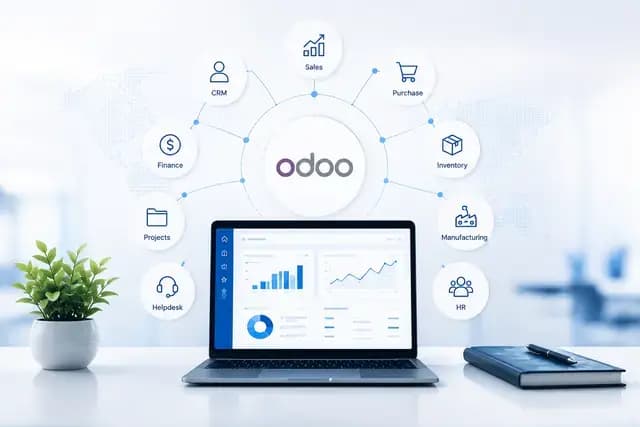
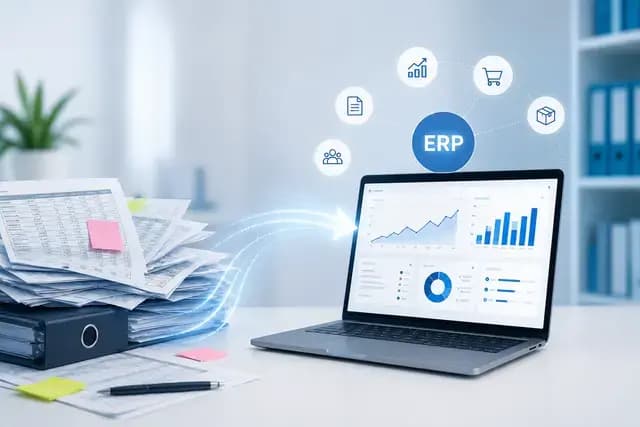
ERP stands for Enterprise Resource Planning. An ERP system brings core business functions, such as accounting, sales, purchasing, inventory and manufacturing, into an integrated platform. Departments work with connected records, while user permissions control who can view, create or approve transactions.
For example, a sales order can guide warehouse picking and delivery, then support invoicing and payment collection. Staff can follow the related documents through each stage instead of rebuilding the transaction in separate files. Platforms such as SAP Business One and Odoo offer different combinations of applications and deployment options, allowing the implementation to reflect the company’s requirements.
10 Key Benefits of ERP Software for Modern Businesses
Modern businesses need ERP systems that can adapt to their operational requirements, improve efficiency, and support long-term growth. Solutions such as SAP Business One and Odoo help businesses manage their core operations through integrated business applications. Whether you are exploring SAP Business One support services or Odoo ERP Implementation, choosing the right ERP software can help streamline processes, improve data visibility, and support better business decisions. Here are ten key benefits of ERP software for modern businesses.
1. Centralized Business Data
ERP brings customer, supplier, item and transaction records into a shared structure. Teams can refer to the same approved information, reducing disagreements caused by different spreadsheets or outdated files.
For a business with branches across Dubai, Abu Dhabi and Sharjah, consistent item codes, prices and customer records make reporting easier to compare. Defined ownership of master data helps keep that information reliable as the business grows.
2. Improved Operational Efficiency
Connected workflows help work move from one department to the next. Purchase requests can follow agreed approval rules, warehouse teams can act on confirmed orders, and finance can access the documents needed for billing.
Managers can identify where work is waiting and who needs to act. For example, a delayed purchase approval becomes visible before it disrupts a delivery or production schedule. This helps teams shorten processing times while keeping the necessary controls.
3. Real-Time Reporting and Business Insights
ERP reporting gives managers access to recorded sales, stock movements, outstanding invoices and purchasing activity without repeatedly combining departmental spreadsheets. Dashboards can highlight overdue balances, low stock or changes in gross margin.
Reports are only as current as the transactions entered and the refresh settings of connected reporting tools. With these defined clearly, management can spot emerging problems earlier and investigate the transactions behind a figure.
Businesses looking to improve reporting and data visibility can also benefit from Power BI consulting services in UAE, which help turn operational and financial data into interactive dashboards and actionable business insights.
4. Better Inventory and Supply Chain Management
ERP helps teams distinguish stock on hand from quantities already committed to customers and goods still on order. Replenishment rules and purchasing information can support more consistent buying decisions.
A UAE distributor importing goods can plan around supplier lead times and stock across several warehouses. Where required, batch, serial number and expiry tracking improve traceability. This visibility can reduce avoidable shortages, excess stock and unnecessary purchases when suitable inventory is already available elsewhere. ERP integration services in UAE can further connect ERP systems with other business applications, helping maintain consistent information across purchasing, inventory, warehousing and sales operations.
5. Improved Financial Management
By connecting accounting with sales, purchasing and inventory, ERP gives finance teams a clearer view of receivables, payables, costs and cash commitments. They can trace balances to supporting transactions and compare performance by branch, department or project.
For UAE businesses, the assessment should cover AED reporting, foreign currency transactions and appropriate VAT configuration. Structured invoice data also supports planning for e-invoicing integration with an Accredited Service Provider. Tax settings, required fields and integration requirements need to be addressed during implementation.
6. Enhanced Collaboration Across Departments
Shared records help teams understand the status of work without depending on repeated calls or messages. Sales can check delivery progress, procurement can see outstanding requirements, and finance can review the documents supporting an invoice.
Clear responsibilities improve the handover between departments. If an order is held for credit review or missing stock, the relevant team can see the issue and take action. This is especially useful when the head office, branches and warehouses operate in different locations.
7. Reduced Manual Work and Errors
Reusing approved transaction data reduces the need to type the same customer details, quantities and prices into several systems. Validation rules, required fields and controlled document flows can help catch missing information or inconsistent entries earlier.
Barcode processes and suitable integrations can further reduce transcription work. These controls are most effective when item records are accurate and employees understand the process, so data preparation and training are essential parts of the project.
8. Better Customer Service
Employees can respond more confidently when they have access to a customer’s order history, delivery status, invoices and outstanding issues. They spend less time asking other departments for updates and can give customers clearer answers.
Reliable availability information also supports more realistic delivery commitments. When returns and service activities are included in the implementation, teams can follow an issue through to resolution and maintain a more complete customer history.
9. Scalability as Your Business Grows
A suitable ERP system provides a foundation for additional users, warehouses, branches and business activities. Companies can introduce further modules as requirements develop, while maintaining common processes and reporting definitions.
Growth still needs planning. More entities, higher transaction volumes or new integrations may require additional licences, infrastructure or configuration. Reviewing these needs during selection helps the company choose a system that can support its next stage of expansion.
10. More Informed Business Decisions
Connected operational and financial information helps management judge the consequences of a decision. A product may sell quickly but generate a weak margin after freight, discounts and returns. A large customer may contribute revenue while placing pressure on cash flow through slow payment.
ERP data gives managers a basis for reviewing pricing, purchasing, credit terms and resource allocation. Consistent measures and regular review help turn reporting into specific actions, such as reducing slow-moving stock or following up overdue accounts.
Which Businesses Can Benefit from ERP Software?
ERP is relevant to businesses of different sizes. The strongest signal is usually operational complexity: more transactions, locations, products or approvals than existing systems can manage reliably. Common examples include:
Trading and distribution companies managing imported goods, purchasing, multiple warehouses and customer credit.
Manufacturers connecting material requirements, production, inventory consumption and product costing.
Retail and food businesses coordinating purchasing, branch stock and sales through suitable point of sale integrations.
Logistics businesses linking operational jobs, customer charges, supplier costs and financial reporting.
Professional services and project businesses tracking budgets, staff time, billing and project profitability.
Business groups requiring consistent reporting across companies, with intercompany processes assessed as part of the solution.
Repeated data entry, frequent stock discrepancies and a month-end close that depends on manually combining files are useful reasons to review whether your current setup still fits the business.
How to Choose the Right ERP System
Begin with the decisions and processes you need to improve. The right ERP system should fit your operating model, budget and capacity to manage change. ERP consulting services in UAE can help businesses assess their operational requirements, evaluate suitable platforms and plan an implementation approach. Use the following checks when comparing solutions:
Define the business requirements. Document your purchasing, sales, inventory and finance workflows, including exceptions such as returns, partial deliveries and approval limits. Separate essential requirements from future improvements.
Test real business scenarios. Ask for demonstrations using examples from your operations. Follow a transaction from beginning to end and confirm what is standard, what requires configuration and what needs development or a third-party application.
Check UAE and integration requirements. Review tax setup, reporting currencies, e-invoicing readiness and connections to existing systems. Confirm supported interfaces and any licence or hosting restrictions before committing.
Compare the full cost. Include software, implementation, hosting, data migration, training, integrations, support and future upgrades. Make sure both one-time and recurring charges are clear.
Assess delivery and ongoing support. Agree responsibilities for data preparation, testing, user training and go-live. Review access controls, backups and recovery arrangements, and confirm how support issues will be handled after launch. Reliable ERP support services are also important for ongoing maintenance, troubleshooting and system optimisation after implementation.
How ALLE TECH Helps Businesses Implement ERP Solutions
At ALLE TECH, we provide ERP software services in UAE, helping businesses implement, customise and improve SAP Business One and Odoo ERP. Our services combine business process understanding with system configuration, integration, reporting and ongoing support.
We start by reviewing how your company operates and where information or work is getting delayed. This helps us define a practical scope and recommend the platform, modules and implementation approach that suit your requirements.
Our ERP implementation approach covers:
Business discovery and scope definition. Reviewing workflows, reporting needs, responsibilities and the controls the business requires.
Configuration and data migration. Setting up the agreed processes and supporting the preparation, migration and validation of master data and opening balances.
Testing and user training. Checking complete business scenarios with your team and training users for their daily responsibilities.
Go-live and ongoing support. Supporting the transition to live operations and helping teams resolve issues and improve system use.
Where the business requires additional capabilities, we assess integrations and add-ons for areas such as warehouse operations, field sales, intercompany transactions and automated notifications. Power BI reporting can provide further analysis across operational and financial data. These requirements are defined within the agreed project scope.
For businesses already using ERP, we can also review the existing setup, identify gaps and plan improvements that help teams make better use of their system.
Discuss Your ERP Requirements with ALLE TECH
Whether you are introducing ERP for the first time or improving an existing system, start with a review of your current processes and priorities. Contact ALLE TECH to discuss SAP Business One, Odoo ERP and the implementation approach that fits your business.
Frequently Asked Questions
Is ERP suitable for small businesses in the UAE?
Yes, when the scope matches the company’s needs. A small business may begin with accounting, sales, purchasing and inventory, then expand as requirements grow. The decision should reflect operational complexity and expected value as well as company size.
How long does ERP implementation take?
The timeline depends on the modules, data readiness, number of locations, integrations and development required. A focused standard implementation can take weeks, while a broader rollout may take several months. ALLE TECH confirms the proposed schedule after assessing the scope.
Can ERP connect with existing business applications?
Often, yes. The approach depends on the ERP edition, hosting model and the interfaces available in each application. Integration design should define which data moves, how frequently it updates and how errors are detected and resolved.
Should our business choose SAP Business One or Odoo?
Both are worth assessing against your workflows, reporting needs, budget and growth plans. ALLE TECH can demonstrate relevant processes in each platform and explain the configuration, integration and support requirements before you decide.